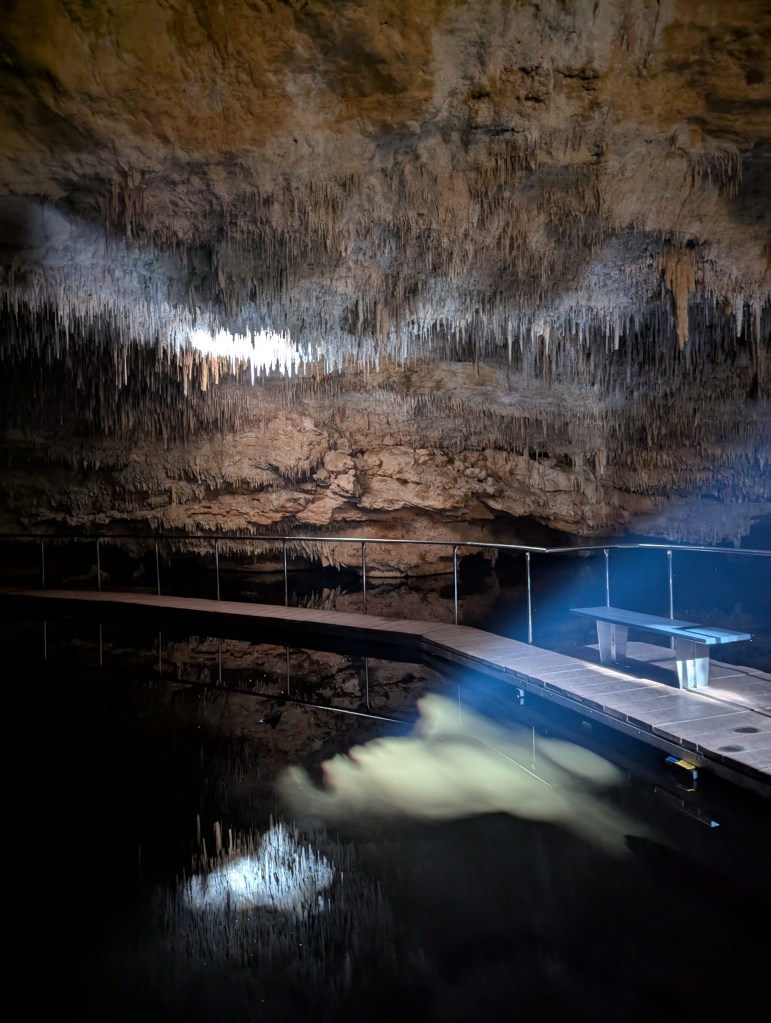
This week, our winter fieldwork and research presentations in the south west of Western Australia took place during seasonably wet conditions. This might sound unremarkable, but this region has been experiencing a long-term decline in winter rainfall over many decades. This has led to a greater pressure on local groundwater resources. Hence our research interest to collaborate with our partners here, to use caves and their stalagmites to understand the timing of groundwater recharge events today and in the past, to inform future management. The field team was myself, Dr Pauline Treble (ANSTO) and Calla Gould-Whaley (UNSW).
The fieldwork started in Yanchep National Park, on Australia’s west coast, an hour north of Perth. There, at the start of last winter, we installed loggers in the cave systems to monitor water movement from the surface through the caves to the groundwater. This was our first time to download the loggers and see how the data looked. Good news! The loggers worked, showing ten recharge events since installation last winter in early June, and ten more recharge events this winter so far. And no recharge at all in the summer half year, when rainfall is below the ‘rainfall recharge threshold’, the amount of rainfall needed for recharge to occur.
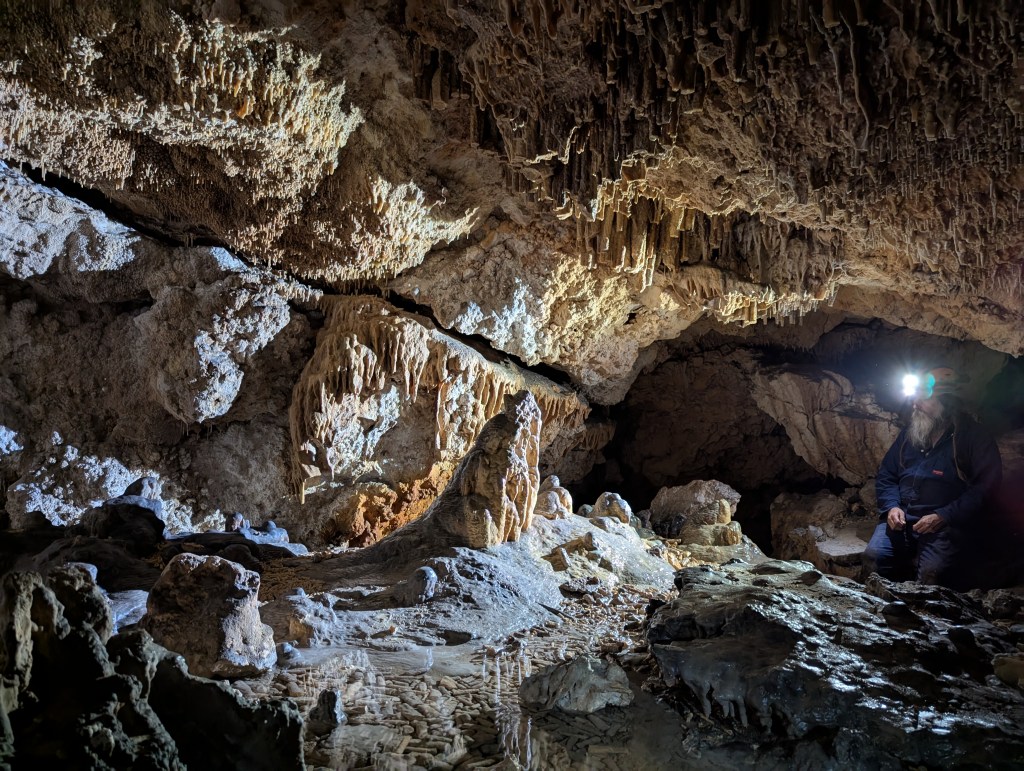
We then moved south to the Leeuwin – Naturaliste National Park, and the long-term monitoring sites established by Pauline Treble (ANSTO). The network of cave drip loggers at Golgotha Cave over a decade of continuous monitoring, and we downloaded over a year of new data. Moving onto Calgardup Cave, we identified possible drip hydrology logger sites to complement ongoing hydrological monitoring there. And finally, we took the opportunity to see how the wetter winter had changed water movement through another coastal cave that has been the focus of research in the last months.
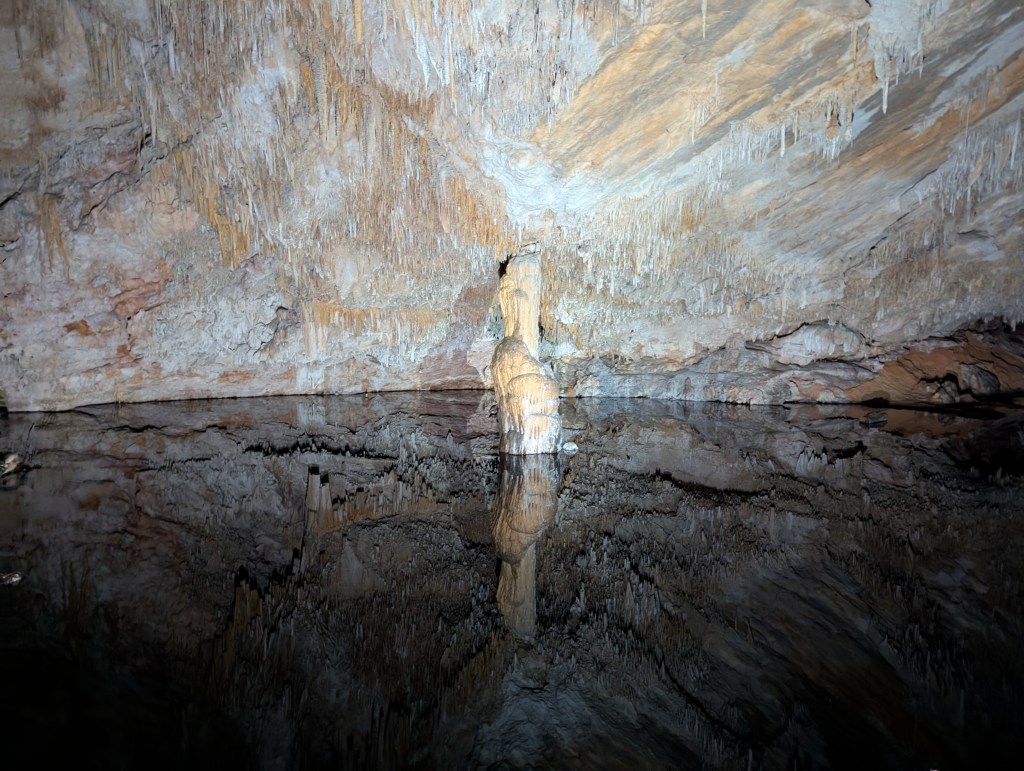
In between the fieldwork, we gave formal invited presentations to the Western Australia Parks and Wildlife team at Yanchep Caves National Park and the Western Australia DEWR hydrogeology team, and informal presentations and engagement with the Leeuwin – Naturaliste National Park team. I had the opportunity to visit the cave climate monitoring stations, part of the ACKMA Cave Climate Monitoring Project at Yanchep and Calgardup, and replace the old temperature and relative humidity loggers with new ones. The old ones are heading back for a calibration check. And we also had time for project meetings with our collaborators at Curtin University and informal meetings with colleagues from the University of Western Australia. Many thanks to everyone for helping make the week such a success.

 Andy Baker
Leave a comment