Groundwater can be replenished by rainfall that percolates from the surface to the water table. The amount of rainfall that is needed to generate this groundwater recharge is hard to measure. We determined this rainfall amount by identifying recharge events as water percolates from the surface, through a cave. During our monitoring, an intense fire occurred above the cave, and we were able to quantify any change in the amount of rainfall necessary to generate recharge before and after the fire.
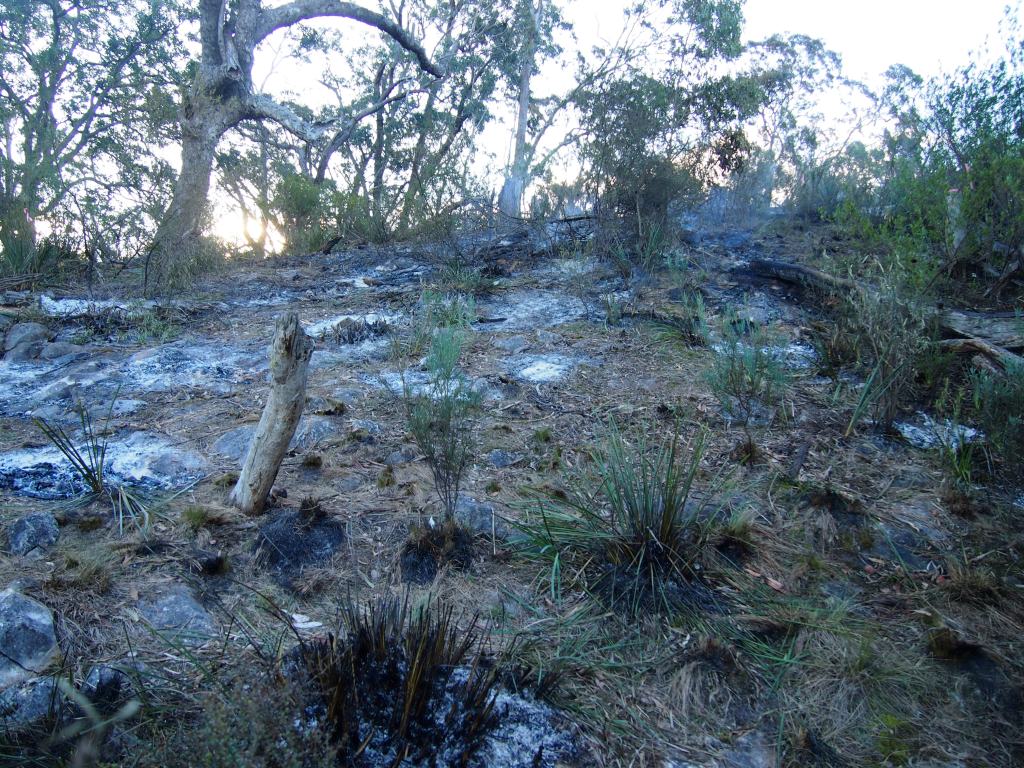
This new paper in the journal Hydrology and Earth System Sciences was led by Christina Song, and co-authored by myself and Micheline Campbell. It can be read and downloaded (Open Access) at https://hess.copernicus.org/articles/29/4241/2025/
We quantified the amount of rainfall needed for water to percolate into the cave, the rainfall recharge threshold, using drip loggers. Our research cave was a near-surface cave: Wildman’s Cave at Wombeyan, southeast Australia, approximately 4 m below the land surface and comprising a 30° slope with 37 % bare rock.

In this paper, we reanalysed data originally published by Bian Fang and colleagues in Science of the Total Environment In just over two years of monitoring, the drip loggers recorded 42 potential recharge events. Water movement to the cave was rapid, with percolation into the cave occurring within 48 h of rainfall.
Using daily rainfall data that was collected at the site, we could calculate that the median 48 h rainfall needed to generate recharge was around 20 mm. However, this changed after the fire. The median 48 h rainfall needed to generate recharge was around 22 mm before the fire and around 16 mm after the fire, with the decrease in rainfall recharge most noticeable starting 3 months after the fire.
At Wildman’s Cave, we infer that soil water storage, combined with the generation of overland flow over bare limestone surfaces, is the pathway for water movement to the subsurface via fractures and that these determine the rainfall recharge threshold.
Immediately after the fire, surface ash deposits initially retard overland flow, and after ash removal from the land surface, soil loss and damage decrease the available soil water storage capacity, leading to more efficient infiltration and a decreased rainfall recharge threshold.
Our results for the rainfall recharge threshold and the number of potential recharge events at Wildman’s Cave are consistent with those published recently by Stacey Priestley and colleagues from other caves in water-limited Australia. It seems that at least 20 mm of rain in 48 hours is needed for recharge to occur almost everywhere we have measured.
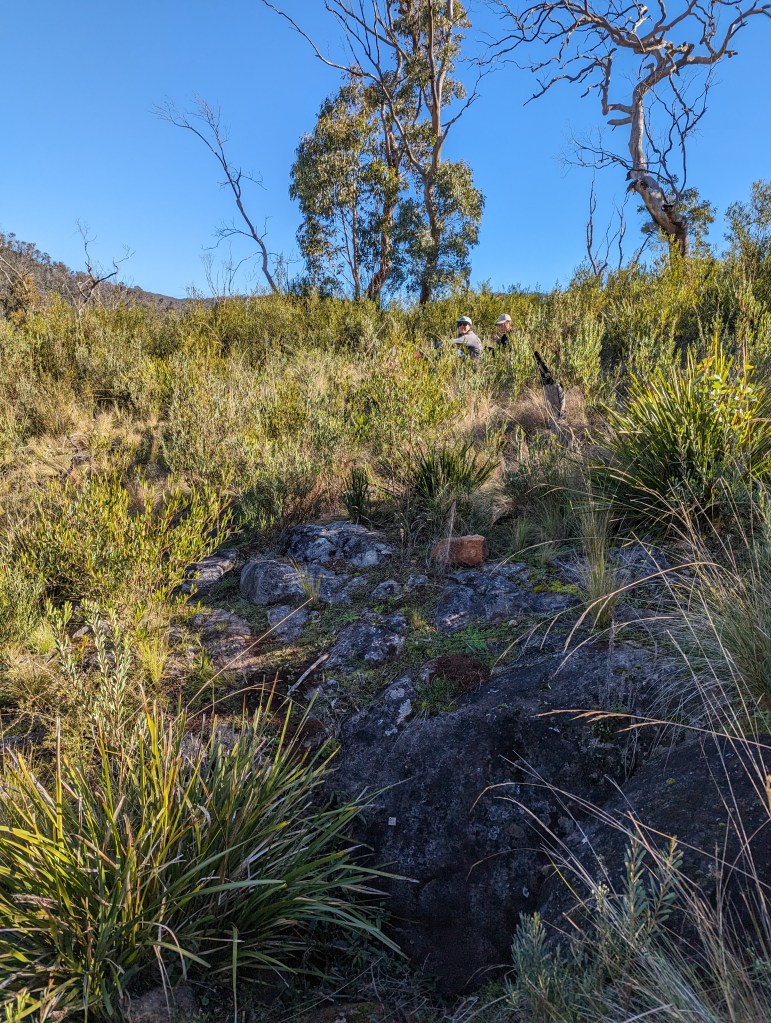
Above Wildman’s Cave in 2023

 Andy Baker
Leave a comment